

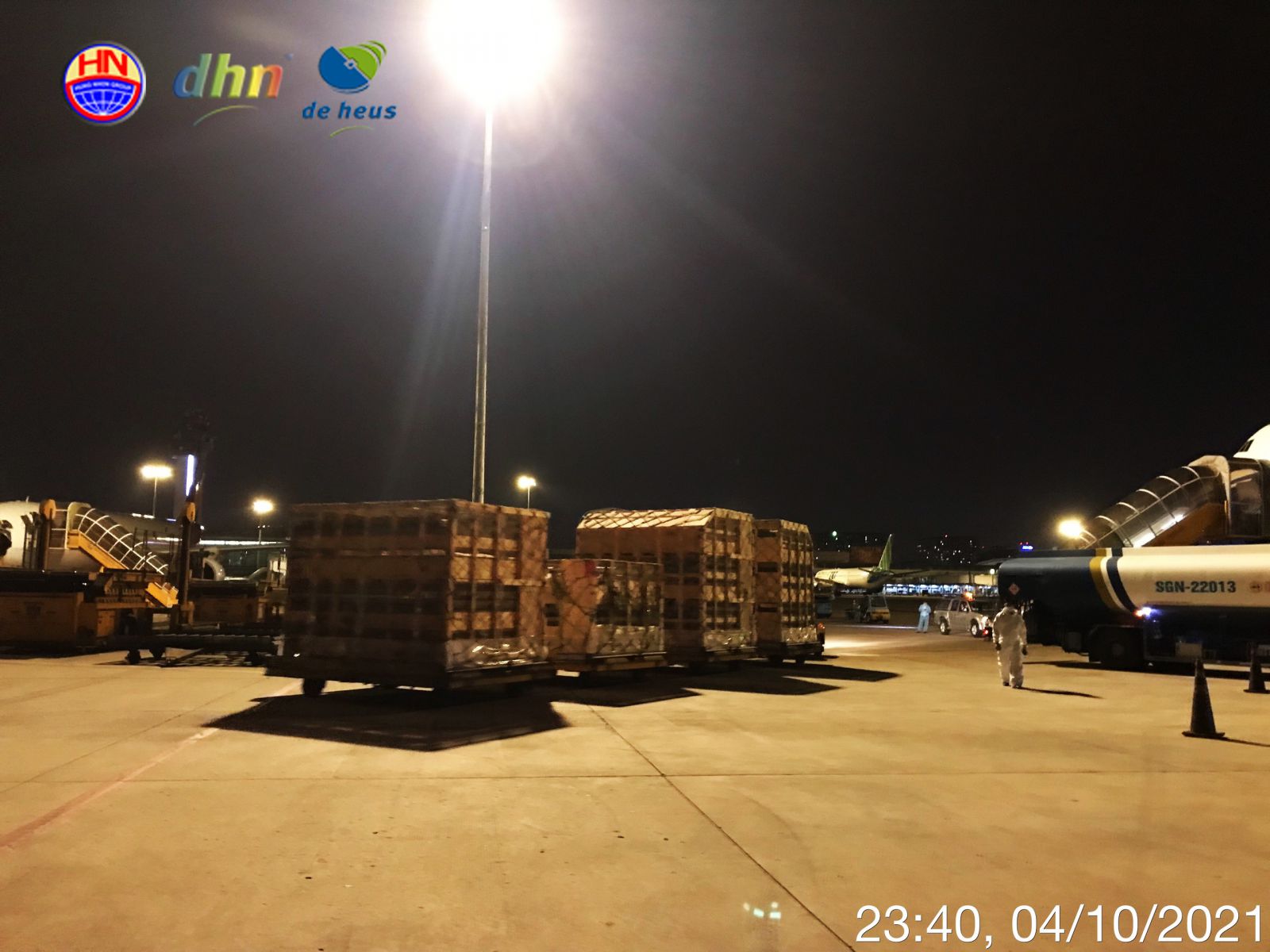
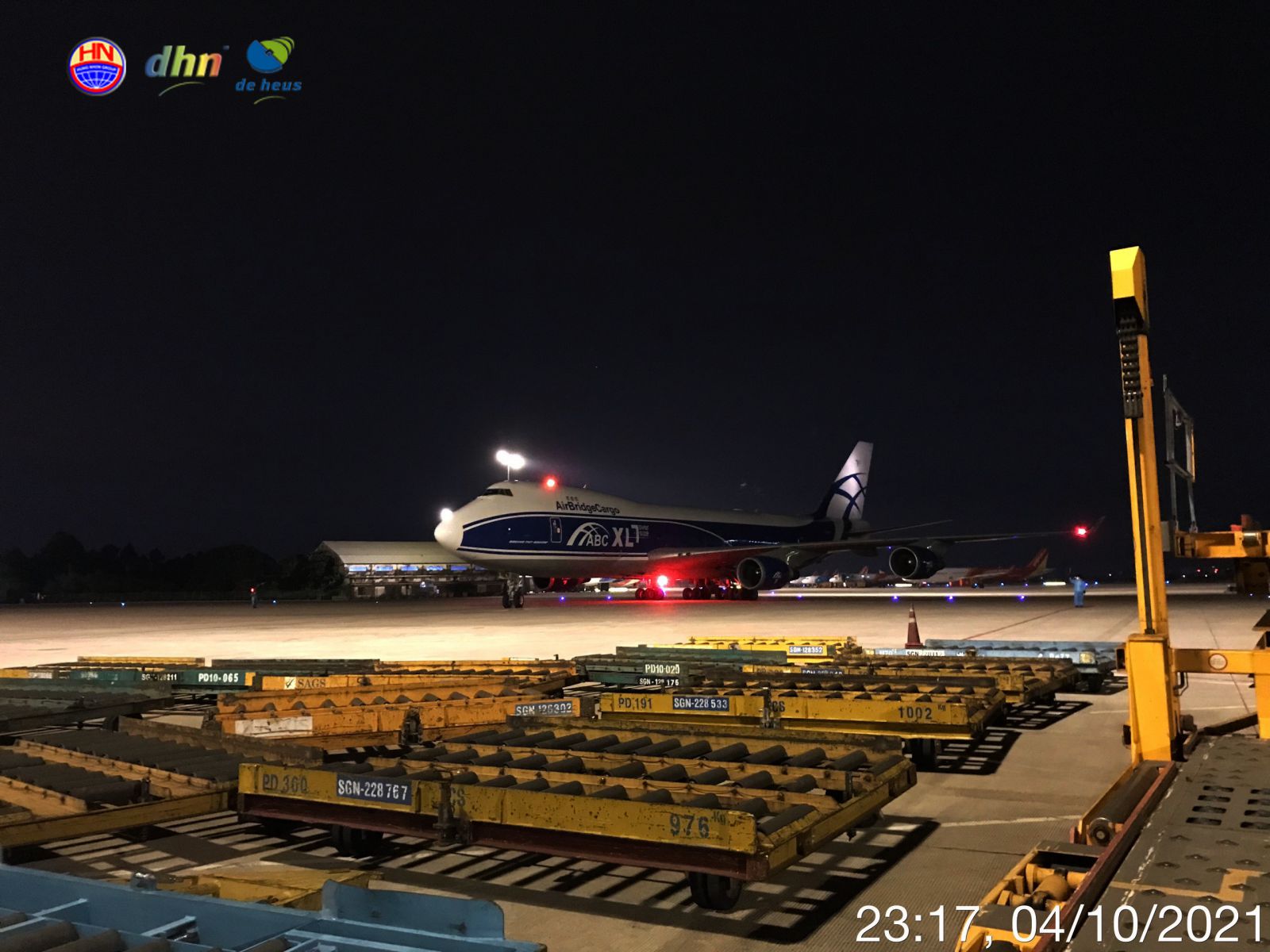
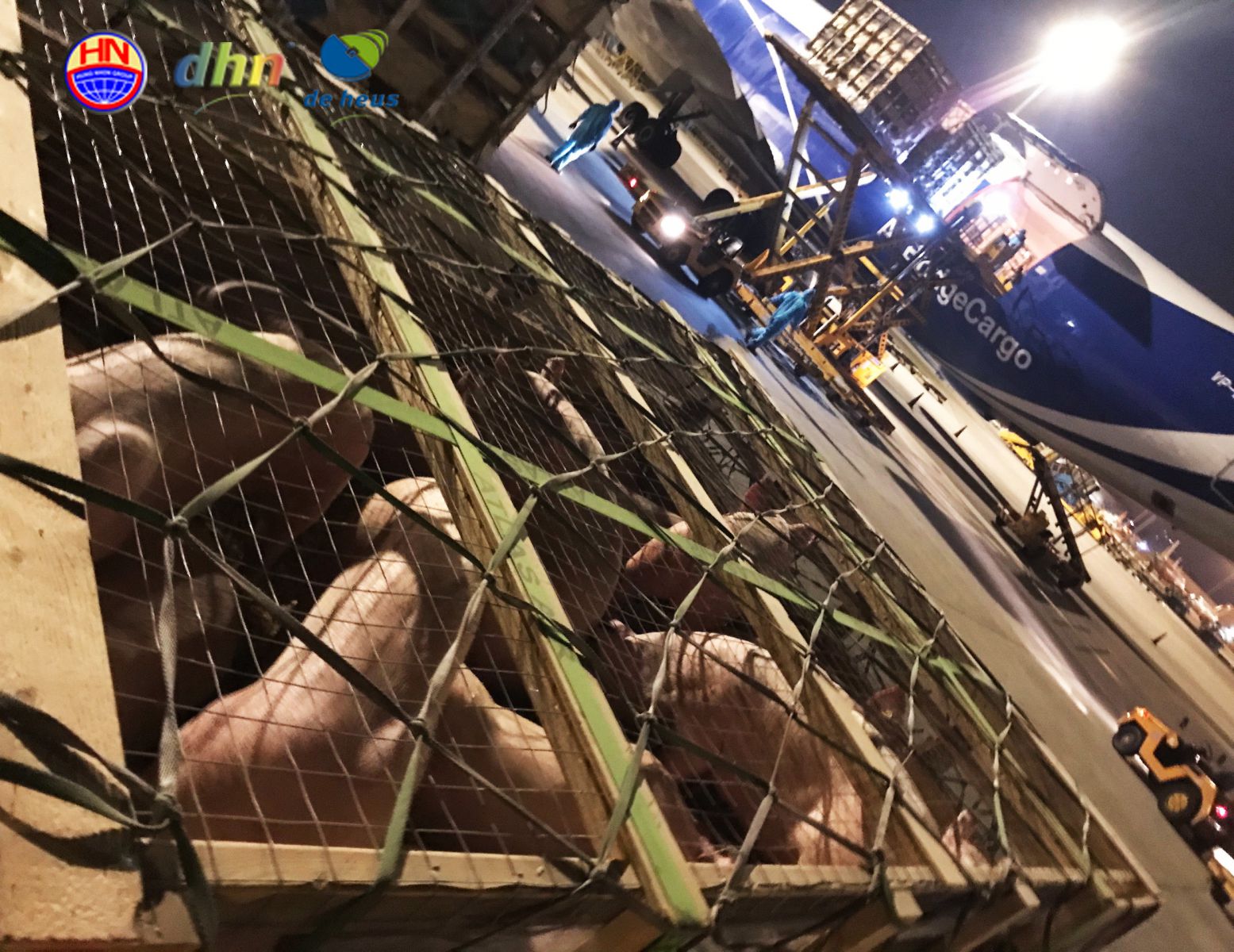
On the evening of October 4, 1,250 high-quality great-grandparent and grandparent pigs, imported by Hung Nhon Group and De Heus Group from their partner Topigs Norsvin, safely landed at Tan Son Nhat International Airport in Ho Chi Minh City after being transported on a private charter flight from Canada.
This shipment of 1,250 pigs was directly imported from Topigs Norsvin, a world-leading brand in providing high-quality breeding pigs.
Specifically, 1,225 great-grandparent and grandparent sows will be transported directly to the DHN Đắk Lắk High-Tech Agricultural Complex located in Cư M'gar district, Đắk Lắk province. The remaining 25 boars will be moved to the Gencen Breeding Boar Semen Center in Bắc Tân Uyên district, Bình Dương province.
Addressing Industry Challenges
For a long time, Vietnam's pig farming industry has been severely impacted by African Swine Fever (ASF). In addition to disease prevention, the need for effective herd repopulation has become extremely urgent.
Beyond ensuring biosecurity and hygiene in farming, breeding stock plays a crucial role as it is the foundation of production, directly influencing productivity, quality, and the cost of pig farming. This is a vital element in maintaining the stability of the livestock industry.
According to pig industry experts, many pig breeds in Vietnam still have unclear origins and are susceptible to disease. The conditions for ensuring biosecurity and raising grandparent and great-grandparent breeds are also not yet optimal. Therefore, importing high-quality great-grandparent and grandparent breeding pigs, and then integrating them into farming models that meet proper standards and biosecurity measures, is extremely necessary. This will supply the market with high-quality, disease-free commercial breeding stock, quickly stabilizing the price of breeding pigs for production.
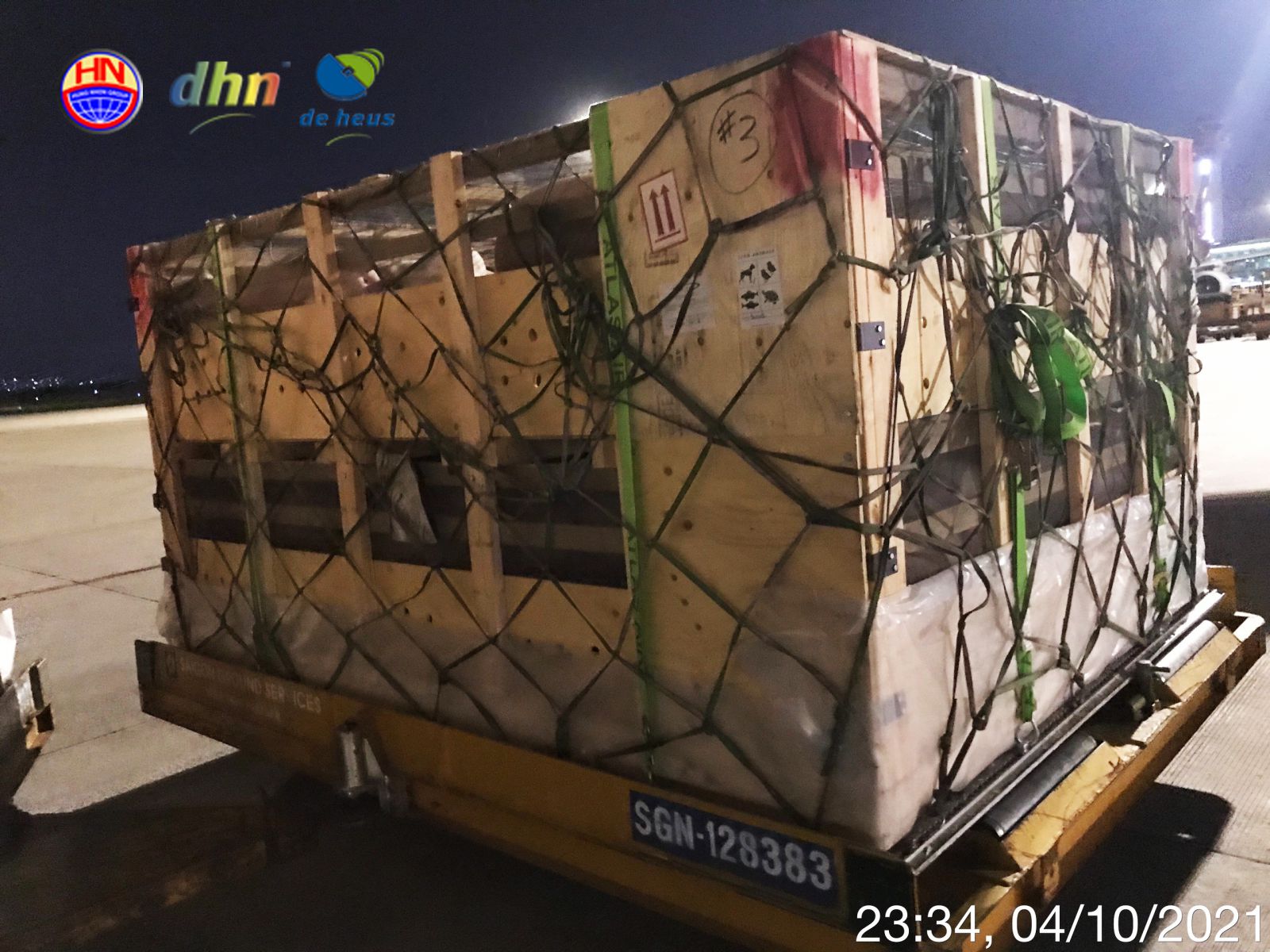
The shipment of 1,250 great-grandparent and grandparent pigs, directly imported from Topigs Norsvin, a leading global brand for high-quality swine genetics, possesses superior genetic traits. These include high prolificacy, excellent maternal care, strong sow longevity, attractive and uniform piglets that grow rapidly, and good adaptability to Vietnam's farming conditions. These traits lead to high farming efficiency, reduced production costs, increased profits, and result in healthy, fast-growing market pigs with excellent feed conversion rates and meat quality.
Given the complex, meticulous, and strict biosecurity requirements for transporting this batch of pigs from Canada to Vietnam, the pigs underwent thorough health checks, disease screening, and strict quarantine for 30 days at Canadian veterinary facilities by Topigs Norsvin and De Heus technical experts in Canada.
Furthermore, to take advantage of the coolest temperatures of the day and minimize the risk of heat stress for the pigs during long transport under the hot daytime sun of Southern Vietnam, De Heus Group and Hung Nhon Group proactively arranged for the flight to arrive at Tan Son Nhat International Airport in the evening. This ensured the pigs could be transported to the farm under the most favorable conditions.
.jpg)
To ensure the successful reception and transport of the pig shipment from the airport to the farm, all involved personnel had to quarantine at a hotel, avoiding contact and consumption of pork products for 48 hours.
All vehicles used for the pig transport were also continuously cleaned and disinfected, and then individually quarantined for 48 hours. The convoy consisted of 12 trucks, containers, and self-propelled cranes, with additional backup vehicles and a specialized crane accompanying the entire journey to ensure continuous transport in case of breakdown.
To maintain biosecurity for the pigs and ensure they wouldn't suffer from thirst, hunger, or fatigue during their journey from Canada to Vietnam, De Heus Group and Hung Nhon Group prepared a dedicated, newly rented staging area for the transfer. This area was located far from residential zones, had never been used for parking before, and was continuously disinfected.
Furthermore, to guarantee biosecurity throughout the entire transportation route from the airport to the farm, De Heus Group and Hung Nhon Group coordinated with local veterinary authorities in the provinces the convoy passed through. The vehicles carrying the pigs would stop far from quarantine stations. After inspections and quarantine procedures were completed, the convoy would be granted priority to depart the station as quickly as possible.
In addition, the two groups arranged for vehicles to provide drinking water, and lead vehicles to clear the way, check for traffic issues, and prepare all necessary veterinary inspection procedures at quarantine stations to minimize stopping time on the road.
At the farm, all pens, equipment, and farming tools were brand new and continuously disinfected for 7 days before the pigs arrived. All clothing and other farming equipment also had to be soaked in 90-degree alcohol.
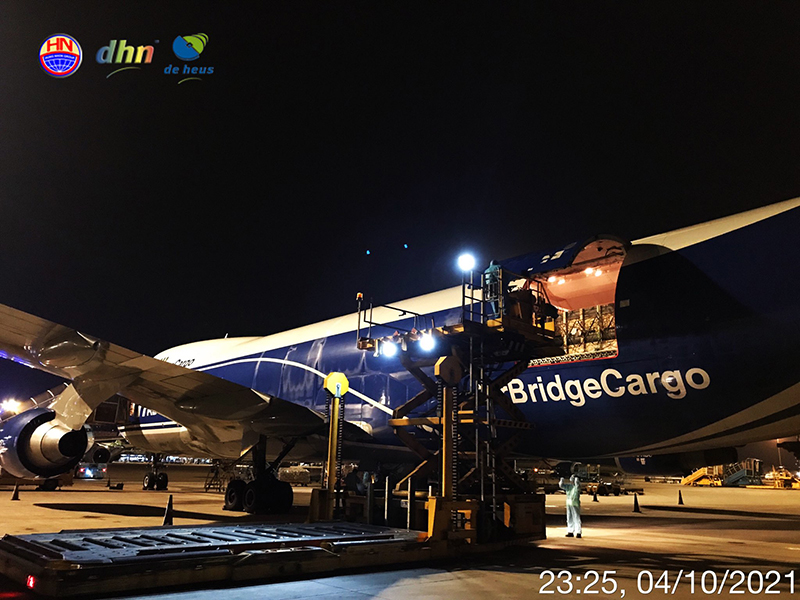
Once in production, this herd of great-grandparent and grandparent pigs is expected to supply the market with approximately 25,000 parent and commercial gilts annually. This will help meet the demand for high-quality and safe breeding pigs in Vietnam's livestock industry, addressing the current scarcity of premium breeding stock that offers optimal productivity in farming.
The DHN Đắk Lắk High-Tech Agricultural Complex is known to be a closed-chain system for producing high-quality agricultural products. This includes selecting and producing breeding pigs, operating an automated pig slaughterhouse, manufacturing organic animal feed, producing organic fertilizers, and trading top-tier Vietnamese livestock products with an eye towards export to Southeast Asia.
The project, with a total investment of approximately $60 million USD (equivalent to 1,500 billion VND) for the 2019-2025 period, is currently the largest pig farming project in the Central Highlands. As part of the DHN Đắk Lắk high-tech agricultural complex, the Đắk Lắk high-yield pig breeding farm boasts a capacity to raise 2,500 great-grandparent and grandparent pigs, all meticulously selected to ensure excellent genetic quality.
The entire breeding and reproduction process is tightly controlled, adhering to strict standards for feed sources, vaccinations, and technical procedures. This rigorous approach aims to produce and meet the increasing demand for high-quality grandparent, parent, and commercial breeding pigs, thereby enhancing farming efficiency, providing clean agricultural products to the market, and working towards establishing a disease-free livestock farming zone.
Phòng thông tin và truyền thông

Vibrant Spring colors across the borderlands.

Dak Lak allocates nearly 7,600 hectares for high-tech livestock development

Dak Lak: 600 Tet gifts presented to disadvantaged households for the Year of the Horse 2026

Vu A Dinh Scholarship Fund commits over 52 billion VND to educational projects

Thanh Hoa attracts major agricultural corporations

Hung Nhon Chairman proposes mechanisms to integrate Vietnamese agriculture into global value chains

The government listens to farmers and promotes breakthroughs in agriculture.

Multi-million dollar investment sparks Tay Ninh’s transformation into a modern poultry hub

De Heus and Hung Nhon expand their investment in high-tech agriculture in Gia Lai.

Many large-scale livestock projects in Tay Ninh are 'stalled'.

Bộ trưởng Trần Đức Thắng: Hợp tác De Heus-Hùng Nhơn - hình mẫu tiêu biểu cho liên kết chuỗi giá trị nông nghiệp

Tây Ninh provincial chairman meets with De Heus, Hùng Nhơn to advance high-tech agricultural projects
Nguyễn Văn Út – chairman of the Tây Ninh Provincial People’s Committee – hosted a working session with representatives of the Royal De Heus Group (the Netherlands) and Hùng Nhơn Group to discuss a strategic investment plan for developing a high-tech agricultural value chain in Tây Ninh for the 2025–2030 period.


