

Global corporations are moving towards a "teal organization" model, meaning they aim for both business excellence and green development. In this trend, domestic enterprises cannot stay out of the "game." However, to move towards this model, businesses are forced to "shake hands" with partners who have potential and experience to leverage each other's strengths.
.jpg)
giữa De Heus và Hùng Nhơn, năm 2022, tại Hà Lan.
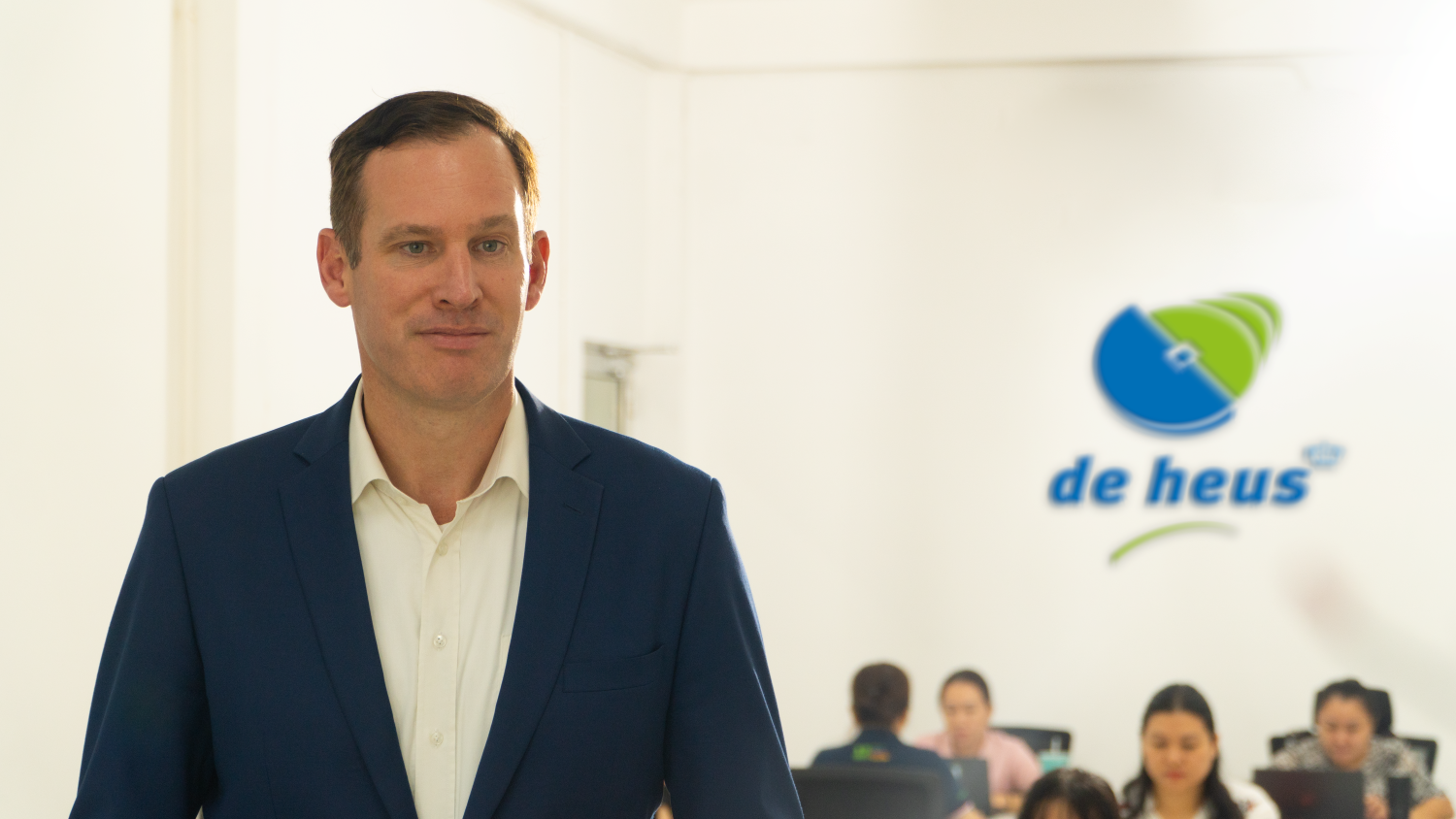
To gain a clearer insight into this direction, ĐTTC had a discussion with Mr. VU MANH HUNG (pictured), Chairman of Hung Nhon Group's Board of Directors, and Mr. GABOR FLUIT (pictured), Global CEO of De Heus Group (Netherlands).
REPORTER: "Mr. Gabor, as a leading global agricultural corporation currently present in over 100 countries, how do you assess Vietnam's agricultural sector?"
Mr. GABOR FLUIT: "Vietnam is an agricultural country, with an incredibly diverse range of self-produced products, from rice, meat, fish, eggs, milk, vegetables, and fruits—it even has a surplus to sell to other countries. Although industrial sectors have seen strong development in recent decades, and services, tourism, banking, and finance have also grown rapidly, agriculture remains the foundation of Vietnam's economy.
A significant number of laborers work in this sector. Especially with many global fluctuations, countries like Vietnam that can self-produce food have demonstrated a clear advantage in food security."
With Vietnam's export value of agricultural, forestry, and fishery products reaching over $53 billion in 2023, it's a considerable figure. However, I believe that if Vietnam moves in the right direction and continues to increase product value, reduce raw exports, and boost deep processing, the export turnover will definitely double.
In my opinion, Vietnam can absolutely achieve $100 billion in agricultural exports. I can cite the example of the Netherlands, a small country, yet its agricultural export turnover has reached $120 billion. Therefore, in the future, with abundant agricultural export potential, the $100 billion mark could be within reach.
Policies Needed to Realize Agricultural Potential
REPORTER: "So, what policies do businesses in this sector need, in your opinion, to realize the potential of the agricultural industry, especially the value chain model?"
Mr. GABOR FLUIT: "In my view, Vietnam will succeed in the long term. Of course, Vietnam must continue to build and develop brands and value chains. When opportunities are seized, even with unpredictable global market conditions, the potential for agricultural exports remains high, and Vietnamese agriculture will continue to develop.
The livestock value chain model demands interconnection, transparency, and compliance with the strict requirements of a true agricultural value chain. This is considered the model most large agricultural enterprises are pursuing, especially those with a green development orientation.
A green production model will bring stability to livestock farming and the quality of output products, ensuring benefits for each unit participating in the agricultural production value chain; it also allows consumers to get closer to food sources with clear traceability and good quality."
Hung Nhon - De Heus Value Chain Model
REPORTER: "It's known that Hung Nhon is cooperating with De Heus on a value chain model. Mr. Vu Manh Hung, could you briefly introduce this chain linkage model?"
Mr. VU MANH HUNG: "The Hung Nhon - De Heus value chain includes two 'locomotives,' De Heus and Hung Nhon, along with their subsidiaries, which will form a closed-loop, circular model. This model is also known as 'from farm to table.'"
.png)
In this value chain, De Heus is a pioneering international group in animal nutrition, production, and sustainable farming; Hung Nhon is an agricultural group with strengths in large-scale livestock farming and advanced technology application; DHN is a high-tech agricultural complex chain with European-standard farm systems; Belga produces high-quality day-old broiler and layer chicks, and hatching eggs; Green Chicken is a slaughtering and processing enterprise that meets Halal export standards; and Visakan specializes in manufacturing and trading veterinary drugs, aquatic animal medicines, and biological products.
In the current trend, the "farm-to-table" agricultural production value chain is the solution transforming all fragmented, broken, and isolated production models that have long existed in the agricultural product market. This model's trend demands synchronization from breeding stock, animal feed production, livestock farming, processing, and food supply. This can be seen as a green economic model in agriculture.
Upcoming Events and Halal Export Ambitions
REPORTER: "Regarding your sustainable development strategy, Hung Nhon and De Heus will organize a series of events related to this value chain on May 18th. Could you share more about these events?"
Mr. VU MANH HUNG: "According to the plan, on May 19th, the Ministry of Agriculture and Rural Development, the People's Committee of Tay Ninh Province, Hung Nhon, and De Heus will organize a series of events, including: the inauguration ceremony of the DHN Tay Ninh High-Tech Livestock Farming Area, the groundbreaking ceremony for seven projects of the DHN Tay Ninh High-Tech Agricultural Complex, the recognition ceremony for the Disease-Free Zone in Tay Ninh province, and the announcement ceremony of the Halal-certified poultry product export plan.
A few days ago, in Bac Ninh province, Visakan, a member of Hung Nhon, held a ceremony for the export of its first batch of veterinary drugs to the Islamic market.
The market of Islamic countries is one of the most demanding in the world. To bring goods into this market, businesses must meet Halal standards. This is considered a strict standard of Islam, from the smallest components to crucial stages like processing and transportation.
Due to the difficulties and stringent regulations of the Halal standard for animal-derived products, Vietnam's current Halal exported products are mainly agricultural produce. Therefore, Visakan's export of a batch of veterinary drugs to Indonesia, the country with the largest Muslim population in the world, is considered an extremely important turning point in Hung Nhon's development strategy."
Why De Heus Chose Hung Nhon
REPORTER: "Mr. Gabor Fluit, why did De Heus choose Hung Nhon for its projects in Vietnam?"
Mr. GABOR FLUIT: "On December 12, 2022, during Prime Minister Pham Minh Chinh's visit to the Kingdom of the Netherlands, De Heus and Hung Nhon signed a Memorandum of Understanding (MoU) on a comprehensive strategic cooperation and partnership between the two groups.
Under the agreement, the two sides will develop a high-tech livestock value chain model for the period 2022-2030. In this, Hung Nhon will invest in building large-scale livestock farms that meet advanced global standards. De Heus will supply these farms with quality pig and chicken breeds according to international standards.
The goal by 2030 is to achieve a capacity of approximately 7,500 breeding pigs in the Central Highlands region; 30,000 commercial sows in the Southeast, South Central Coast, and Central Highlands regions; 58 million breeding chickens and 25 million broiler chickens in Tay Ninh. The total estimated revenue is about $2 billion per year.
To answer why De Heus chose Hung Nhon, I would like to quote Global CEO Koen De Heus from the MoU signing ceremony: 'Hung Nhon is a reputable, professional enterprise in the field of livestock farming in particular and agriculture in general. Specifically, Hung Nhon's operating model aligns with our development plan and business expansion goals of becoming a companion to livestock farmers and businesses in Vietnam's livestock sector. By combining the best, the advantages of both sides, De Heus and Hung Nhon share a common vision to improve and modernize the livestock industry, while contributing to an independent and competitive livestock sector, enhancing productivity and improving the livelihoods of Vietnamese farmers.'"
Advice for Domestic Enterprises Partnering with Foreign Companies
REPORTER: "Mr. Vu Manh Hung, could you share your experience with domestic enterprises that have been or are planning to 'shake hands' with foreign partners?"
Mr. VU MANH HUNG: "Our mindset is: 'If you want to go fast, go alone; if you want to go far, go together.' Because the potential of most Vietnamese enterprises is still small, we need to 'stand on the shoulders of giants,' we must rely on them to advance. Of course, they will also have benefits in the relationship, but we must establish a win-win cooperation, not one where one party dominates the other. The most important thing is the approach and the way to establish a harmonious system of benefits for all parties.
In my opinion, when cooperating with 'big players,' we must always look 10-20 years ahead, not just at the present. A prime example is DHN, our joint venture project with De Heus. In this project, we focus on disease-free zones, as this will almost entirely determine the fate of the livestock farm.
As for revenue, profit, and consumption markets, we have our own plan based on a long-term vision. For now, we are focusing on supplying the domestic market with nearly 100 million people, but our ambition is to export to Southeast Asian countries and even further to the 500-million-person European market."
REPORTER: "Thank you both for this interesting conversation."

Hung Nhon: Controlling the Entire Value Chain to Access International Markets
“A good product alone is not enough to enter highly demanding markets. Behind the product must be an integrated production chain with consistent control, from breeding stock, animal feed, farms and biosecurity to processing, traceability and environmental standards.”

HUNG NHON NEWS – ISSUE 06 (AUGUST 2026)
HUNG NHON NEWS – ISSUE 06 (AUGUST 2026)

Hung Nhon - De Heus Strengthen Connections for Dutch Investment in Tay Ninh
Hung Nhon - De Heus Strengthen Connections for Dutch Investment in Tay Ninh

Hung Nhon – De Heus Commit VND 18.3 Trillion to Expand the High-Tech Agricultural Value Chain in Tay Ninh
Tay Ninh, August 28, 2026 – As part of the Tay Ninh 2026 Investment Promotion Conference, the Tay Ninh Provincial People’s Committee held a ceremony to acknowledge the investment interest of 41 corporations in 59 projects, with total proposed investment capital of approximately VND 720 trillion, equivalent to US$28 billion.

Hung Nhon Presents Gifts to Families Affected by Agent Orange/Dioxin and Disadvantaged Students in Tay Ninh
Tay Ninh, August 27 – Hung Nhon Group presented 100 gift packages, with a total value of VND 75 million, to families affected by Agent Orange/Dioxin and students facing difficult circumstances in Tan Hoi Commune, Tay Ninh Province.

Hung Nhon participates in policy dialogue at the Vietnam Private Sector Economic Forum 2026 in Dong Nai City
Hung Nhon participates in policy dialogue at the Vietnam Private Sector Economic Forum 2026 in Dong Nai City

HUNG NHON NEWS – ISSUE 05 (JULY 2026)
HUNG NHON NEWS – ISSUE 05 (JULY 2026)

De Heus – Hung Nhon propose expanding the high-tech agricultural value chain in Dak Lak
De Heus – Hung Nhon propose expanding the high-tech agricultural value chain in Dak Lak

Hung Nhon joins Tay Ninh provincial leaders in visiting and honoring families of national contributors in Tay Ninh Province
Hung Nhon joins Tay Ninh provincial leaders in visiting and honoring families of national contributors in Tay Ninh Province

Hung Nhon pays tribute to the heroic martyrs of Regiment 207, Military Region 8
Hung Nhon pays tribute to the heroic martyrs of Regiment 207, Military Region 8

Hung Nhon joins Tay Ninh provincial leaders in supporting families of national contributors and disadvantaged students
Hung Nhon joins Tay Ninh provincial leaders in supporting families of national contributors and disadvantaged students

Hung Nhon pays a respectful visit to Vietnamese Heroic Mother Lam Thi Ranh in Binh Hoa Commune, Tay Ninh Province
Hung Nhon pays a respectful visit to Vietnamese Heroic Mother Lam Thi Ranh in Binh Hoa Commune, Tay Ninh Province


